
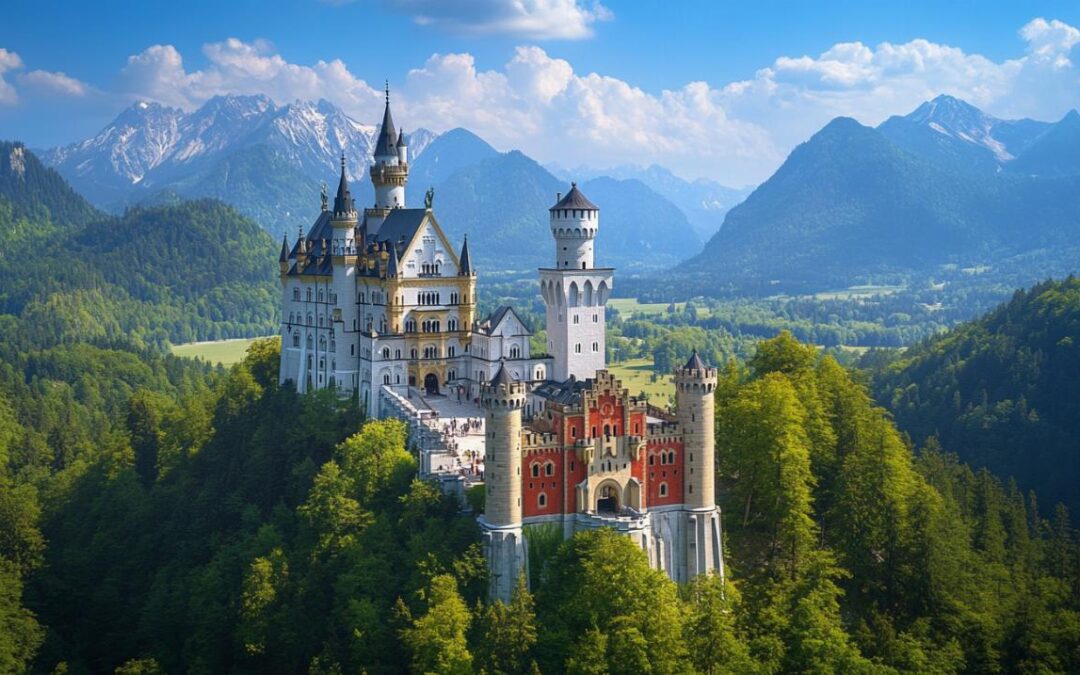
Perched majestically atop a rugged Bavarian hillside, Neuschwanstein Castle commands the imagination of travellers from across the globe. This spectacular edifice, with its soaring towers and romanticised silhouette, has become one of Germany's most iconic landmarks, drawing well over a million visitors each year. Yet beneath the layers of fairytale imagery and popular myth lies a complex historical narrative that intertwines ambition, artistry, and tragedy. Understanding the true story behind this celebrated structure requires peeling back the romantic veneer to reveal the reality of its creation, the eccentricities of its royal patron, and the architectural innovations that brought it into existence.
The historical truth behind bavaria's most iconic fortress
King Ludwig II's Vision and the Castle's Authentic Origins
Neuschwanstein Castle owes its existence to the singular vision of King Ludwig II of Bavaria, a monarch whose reign was marked by a deep fascination with medieval chivalry, operatic grandeur, and an increasingly reclusive lifestyle. Commissioned in 1868 and with construction commencing the following year, the castle was conceived as a personal retreat rather than a functional seat of power. Ludwig, often referred to as the Swan King, sought to create a sanctuary far removed from the political pressures and public scrutiny that defined his role as a constitutional monarch. His admiration for the composer Richard Wagner profoundly influenced the castle's design, as he intended Neuschwanstein to serve as a tribute to the dramatic themes and mythological worlds portrayed in Wagner's operas.
Funding for this ambitious project came primarily from Ludwig's personal fortune, supplemented by substantial borrowing. The king's financial commitment was extraordinary, reflecting both his dedication to his romanticised vision and his disregard for the fiscal realities facing the Bavarian state. Located in Hohenschwangau, the castle was built on the site of two older fortresses, and its construction involved the labour of approximately two hundred artisans in 1880, with daily workforce numbers rising to as many as three hundred labourers. Despite the scale of the endeavour, the castle remained unfinished at the time of Ludwig's mysterious death in 1886, with only fifteen rooms fully completed. This incomplete state underscores the gap between the king's grand aspirations and the practical limitations imposed by time, resources, and his own tragic fate.
Architectural innovations that shaped neuschwanstein's construction
While Neuschwanstein is often perceived as a medieval fortress, it is in fact a product of the nineteenth century, embodying the aesthetic principles of Castle Romanticism rather than the defensive necessities of earlier fortifications. The architectural design blends elements of Romanesque, Gothic, and Byzantine styles, creating a visual pastiche that evokes the spirit of an imagined past rather than replicating any single historical precedent. This eclecticism reflects Ludwig's desire to construct a building that would resonate with the operatic and mythological themes he cherished, transforming stone and mortar into a stage set for his private fantasies.
Technologically, Neuschwanstein was remarkably advanced for its time. Contrary to its medieval appearance, the castle was equipped with modern Victorian amenities that provided comfort and convenience unheard of in genuine medieval castles. These included central heating, running water on multiple floors, and sophisticated ventilation systems. The façade, while evoking ancient grandeur, was in many respects a carefully crafted illusion, designed to satisfy Ludwig's romantic sensibilities while incorporating contemporary engineering solutions. The castle's Singers' Hall, an opulent chamber intended for operatic performances, stands as one of the most striking examples of this duality. Designed to host grand spectacles inspired by Wagner's work, the hall never witnessed a single performance during Ludwig's lifetime, remaining a silent testament to unrealised dreams.
The structure itself reaches a height of sixty-five metres, dominating the surrounding landscape and offering sweeping views over the Bavarian countryside. The scale and ambition of Neuschwanstein's construction were matched only by the complexity of its logistical challenges, as materials and labourers had to be transported to the remote hilltop site. The blend of historical revivalism and modern innovation that defines Neuschwanstein makes it a unique architectural achievement, straddling the line between authentic craftsmanship and theatrical fantasy.
Debunking common myths surrounding the fairytale palace
Disney's inspiration: separating marketing from historical facts
One of the most persistent myths surrounding Neuschwanstein Castle is its purported role as the direct inspiration for the iconic Sleeping Beauty Castle featured in various Disney theme parks. While the resemblance is undeniable and the visual echoes are striking, the relationship between Neuschwanstein and Disney's creations is more nuanced than popular belief suggests. Disney's designers drew upon a wide range of European castles and romantic architecture when crafting their theme park landmarks, and Neuschwanstein was certainly among the influences. However, attributing the design solely to Ludwig's creation oversimplifies the creative process and elevates marketing narrative over historical accuracy.
This myth has been perpetuated by tourism industries and popular media, which have capitalised on the fairytale associations to boost visitor numbers and reinforce the castle's status as a symbol of romantic fantasy. While Neuschwanstein's aesthetic undoubtedly contributed to the broader cultural lexicon of what a fairytale castle should look like, treating it as the sole or primary model for Disney's work misrepresents both the castle's historical context and the artistic methods employed by twentieth-century animators and designers. The conflation of Neuschwanstein with Disney's imagery has, in some ways, obscured the more complex and often darker aspects of Ludwig's legacy, reducing a multifaceted historical narrative to a simplified tale of enchantment.
Medieval fortress or romantic fantasy: what neuschwanstein really represents
Another widespread misconception is that Neuschwanstein functions as a genuine medieval fortress, a relic of feudal warfare and ancient Bavarian defence systems. In reality, the castle was never intended to serve a military purpose. Its construction in the late nineteenth century placed it squarely within the era of romantic revivalism, a movement that sought to recapture the imagined grandeur of the medieval period without adhering to the functional requirements that shaped authentic fortifications. Neuschwanstein is a Romanesque Revival palace, a theatrical expression of Ludwig's personal ideals rather than a practical stronghold.
The castle's design prioritised aesthetic impact and symbolic resonance over defensive capability. Its turrets, battlements, and towering walls evoke the imagery of chivalric romance and operatic drama, but lack the strategic features that characterised true medieval castles. This distinction is crucial for understanding what Neuschwanstein represents: not a monument to military history, but a deeply personal architectural manifestation of one man's retreat from reality into a world of myth and legend. Ludwig's mental health came under scrutiny during his later years, with political opponents questioning his fitness to rule. This scrutiny culminated in a political coup that saw him declared insane and removed from power, leading to his mysterious drowning at Lake Starnberg under circumstances that remain the subject of speculation and debate to this day.
The tragic narrative surrounding Ludwig's death has further fuelled the myths that envelop Neuschwanstein, transforming the castle into a symbol of romantic tragedy and unfulfilled dreams. The juxtaposition of Ludwig's visionary aspirations and his tragic end has imbued the castle with an aura of melancholy that resonates with visitors, reinforcing its identity as a monument to both beauty and sorrow.
Experiencing Neuschwanstein as a Modern Tourist Attraction
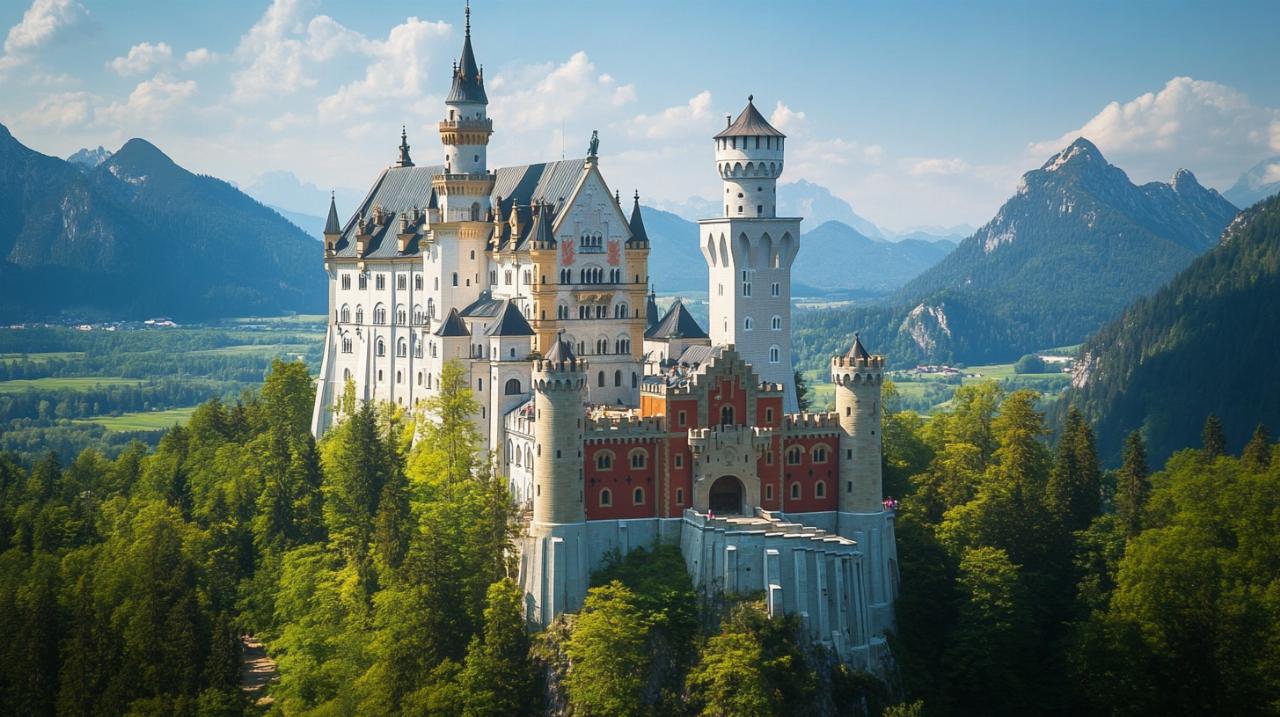
Navigating the castle's most significant architectural features
For those fortunate enough to visit Neuschwanstein, the experience is both awe-inspiring and revealing. The castle's interior tours, though limited, offer glimpses into the opulent yet incomplete vision that Ludwig pursued. Among the most significant features is the aforementioned Singers' Hall, a lavishly decorated space that stands as a testament to Ludwig's devotion to Wagner and his love of operatic grandeur. The hall's ornate frescoes and rich materials evoke the spirit of medieval pageantry, yet the silence within its walls serves as a poignant reminder of the performances that never took place.
Other completed rooms within the castle showcase the blend of historical revivalism and modern comfort that defines Neuschwanstein. Visitors can admire intricately carved woodwork, elaborate murals depicting scenes from Germanic mythology, and the sophisticated amenities that made the castle a marvel of nineteenth-century engineering. However, the unfinished sections of the castle, accessible only through limited pathways, reveal the extent to which Ludwig's vision exceeded the realities of his reign. These incomplete spaces underscore the castle's dual nature as both a completed masterpiece and an eternal work in progress.
Practical Guide to Exploring the Bavarian Landmark Authentically
Visiting Neuschwanstein requires some preparation, as the castle's remote hilltop location presents logistical challenges for travellers. Reaching the entrance involves either a strenuous uphill hike or a scenic carriage ride, both of which offer stunning views of the surrounding Bavarian landscape. The journey to the castle is an integral part of the experience, allowing visitors to appreciate the dramatic setting that Ludwig chose for his retreat. The physical effort required to reach Neuschwanstein enhances the sense of arrival and underscores the castle's isolation from the modern world.
Given the immense popularity of the site, with approximately 1.3 million people visiting annually, it is essential to book tickets in advance and arrive early to avoid the busiest periods. Tours are conducted in multiple languages and are structured to manage the flow of visitors through the limited number of accessible rooms. While photography inside the castle is restricted, the external vantage points and surrounding trails provide ample opportunities to capture the castle's striking façade and its integration into the natural landscape.
Beyond the castle itself, the broader region of Hohenschwangau offers additional historical and cultural attractions, including the nearby Hohenschwangau Castle, where Ludwig spent much of his childhood. Exploring these sites in conjunction with Neuschwanstein provides a richer understanding of the king's formative influences and the environment that shaped his singular vision.
Neuschwanstein's history extends beyond Ludwig's lifetime, as the castle played unexpected roles in the twentieth century. During World War II, it was repurposed as a storage depot for over twenty-one thousand stolen art pieces, serving as a warehouse for cultural treasures looted by the Nazis. In 1945, Captain James Rorimer played a crucial role in saving the castle and its contents from destruction as Allied forces advanced through Bavaria. This chapter in Neuschwanstein's history adds another layer to its complex legacy, transforming it from a romantic retreat into a site of cultural preservation and historical reckoning.
The castle was opened to the public just two months after Ludwig's death in 1886, swiftly transitioning from a private royal sanctuary into a major tourist attraction. This rapid transformation reflects both the public's fascination with Ludwig's tragic story and the enduring appeal of the castle's architectural splendour. Today, Neuschwanstein stands as Germany's most visited secular building, a status that speaks to its unique position at the intersection of history, myth, and popular culture. For visitors willing to look beyond the fairytale imagery, the castle offers a profound meditation on the tension between vision and reality, ambition and limitation, beauty and tragedy.