
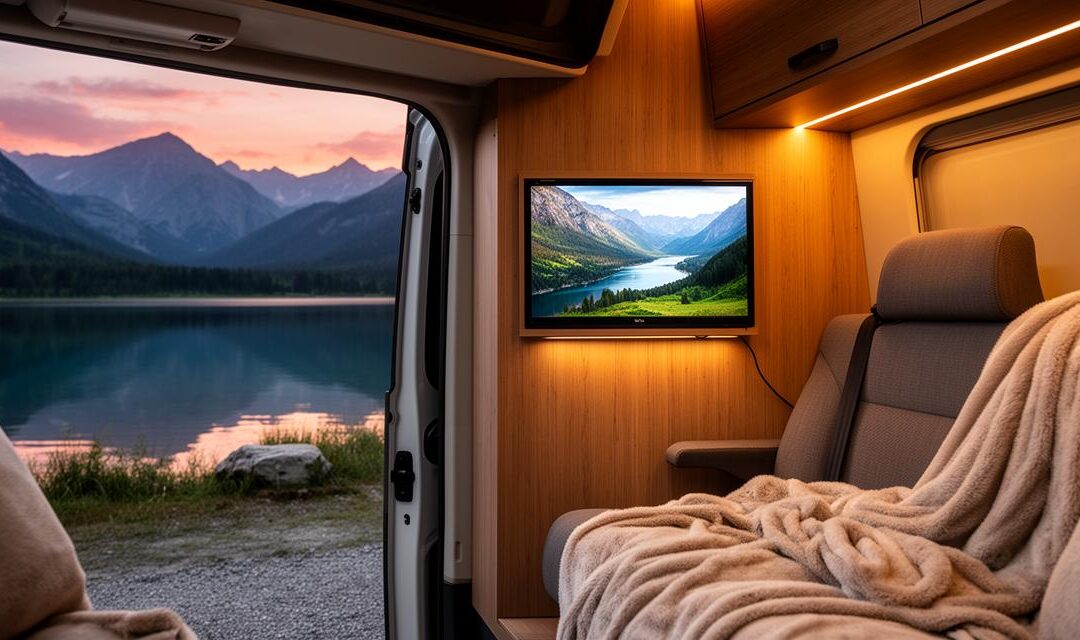
For those who enjoy the freedom of life on the open road, a motorhome represents more than just a vehicle; it's a home away from home. As evenings draw in at a picturesque campsite or a remote layby, many travellers appreciate the comfort of a television to unwind with their favourite programmes or films. However, selecting the right television for a motorhome is not as straightforward as picking a model for a static living room. The unique demands of mobile living, from power constraints to space limitations, require careful consideration of a range of technical and practical factors. This guide explores the essential aspects of choosing a television for your motorhome, with a particular focus on why smart features have become increasingly valuable for those who seek entertainment on the road.
Essential technical specifications for motorhome televisions
When selecting a television for a motorhome, understanding the technical specifications is crucial to ensuring that the device will perform reliably throughout your travels. Unlike conventional home televisions, those designed for motorhomes must contend with limited space, variable power supplies, and the need for robust construction to withstand the rigours of travel. The primary considerations include the physical dimensions, power efficiency, and the ability to receive broadcast signals in diverse locations.
Size, Weight, and Energy Efficiency: Finding the Perfect Balance
The dimensions of a television are among the most important factors to consider when outfitting a motorhome. Space within a motorhome is at a premium, and every item must justify its footprint. Televisions designed for campervans typically range from sixteen to twenty-five inches diagonally, which provides a comfortable viewing experience without overwhelming the limited interior space. A screen size within this range is particularly suitable for close-range viewing, as the distance between the seating area and the television is considerably shorter than in a conventional home setting.
Weight is another critical consideration. A lightweight television reduces the strain on mounting brackets and the interior walls of the motorhome, which are often not as robust as those found in traditional houses. When a vehicle is in motion, lighter fixtures are less likely to become dislodged or cause damage. Moreover, a lighter television contributes to the overall weight efficiency of the motorhome, which can have a positive impact on fuel consumption and handling. LED screen technology has become the preferred choice for motorhome televisions, as these models are not only lighter than older CRT designs but also offer superior energy efficiency. LED screens consume significantly less power, which is essential when relying on a vehicle's battery or off-grid power sources.
Energy efficiency is paramount in a motorhome environment. Many motorhome owners prefer twelve-volt televisions, which draw power directly from the vehicle's existing twelve-volt supply. This configuration is particularly advantageous for those who spend extended periods off-grid, as it allows the television to operate without the need for an inverter or mains electricity. Battery-powered televisions offer an additional layer of flexibility, as they can function independently of the motorhome's electrical system. These models typically feature built-in rechargeable batteries, making them ideal for use in remote locations where traditional power sources are unavailable.
Understanding DVB Tuners and Satellite Compatibility for Mobile Reception
Receiving a clear and consistent television signal while travelling can be challenging, as motorhomes frequently move between different regions and signal environments. To address this, it is essential to select a television equipped with the appropriate tuners and connectivity options. DVB tuners, which stand for Digital Video Broadcasting, are integral to modern televisions and enable the reception of digital terrestrial signals. These tuners are essential for accessing free-to-air broadcasts while on the road, ensuring that you can enjoy your favourite channels without the need for a subscription service.
For those who venture into more remote areas or travel across international borders, satellite compatibility becomes an important consideration. Many motorhome owners invest in satellite antennas, which provide a more reliable signal in locations where terrestrial reception is poor or non-existent. When choosing a television, it is advisable to ensure that the model is compatible with satellite systems, as this will allow you to connect to a broader range of channels and services. Some televisions are specifically designed with integrated satellite tuners, which simplify the setup process and reduce the need for additional equipment.
In addition to traditional broadcast methods, modern televisions increasingly support streaming services, which can be accessed via WiFi or a mobile hotspot. This capability is particularly valuable for motorhome owners who wish to watch on-demand content while travelling. However, it is important to verify that the television includes the necessary connectivity features, such as WiFi and Bluetooth, to take full advantage of these services. The ability to connect to a mobile hotspot ensures that you can enjoy streaming platforms even in areas where fixed broadband is unavailable.
Smart tv features that enhance your motorhome entertainment experience
The advent of smart television technology has revolutionised the way we consume entertainment, and motorhome owners are increasingly recognising the benefits of integrating these features into their mobile living spaces. Smart televisions offer a host of capabilities that go beyond traditional broadcast viewing, providing access to a wide range of streaming services, connectivity options, and multimedia functions that enhance the overall entertainment experience on the road.
Streaming Services and Connectivity Options: Netflix, Amazon Prime, and Beyond
One of the most compelling reasons to choose a smart television for your motorhome is the access it provides to popular streaming services such as Netflix, Amazon Prime, and a host of other platforms. These services have become an integral part of modern entertainment, offering vast libraries of films, television programmes, and documentaries that can be enjoyed on demand. For motorhome owners, the ability to stream content directly to the television eliminates the need for physical media or external devices, simplifying the setup and reducing clutter within the vehicle.
Smart televisions typically operate on one of several operating systems, including Tizen, Web OS, and Google TV, each of which offers a user-friendly interface for accessing apps and services. These platforms are designed to be intuitive, allowing users to navigate between different streaming services with ease. The integration of these apps directly into the television means that you can enjoy a seamless viewing experience, whether you are watching the latest series on Netflix or exploring new content on Amazon Prime.
Connectivity is a key consideration when evaluating smart television features. WiFi capability is essential, as it allows the television to connect to the internet via a router or mobile hotspot. This connectivity opens up a world of possibilities, from streaming services to social media and web browsing. For motorhome owners who frequently travel to locations with limited or no fixed broadband, the ability to connect via a mobile hotspot is invaluable. By tethering the television to a smartphone or portable router, you can enjoy high-quality streaming even in remote areas, provided there is adequate mobile signal coverage.
Bluetooth functionality further enhances the versatility of smart televisions. Bluetooth allows you to connect wireless headphones, speakers, or other audio devices, enabling a more personalised and immersive audio experience. This feature is particularly useful in a motorhome, where space constraints may make it impractical to install a full surround sound system. Additionally, Bluetooth connectivity can facilitate the pairing of external devices such as keyboards or game controllers, expanding the range of activities that can be enjoyed on the television.
Bluetooth, usb, and hdmi: maximising your multimedia capabilities
Beyond streaming services, smart televisions offer a variety of input options that allow you to connect external devices and expand your multimedia capabilities. USB and HDMI ports are among the most important connectivity features to look for when selecting a television for your motorhome. These ports provide the flexibility to connect a wide range of devices, from USB flash drives and external hard drives to gaming consoles, laptops, and cameras.
USB ports enable you to play media files directly from a storage device, which is particularly convenient for those who prefer to download content in advance or who have a personal library of films and music. This feature eliminates the need for a stable internet connection, making it an excellent option for off-grid travel. HDMI ports, on the other hand, are essential for connecting high-definition devices such as Blu-ray players, streaming sticks, or satellite receivers. The versatility of HDMI connectivity ensures that you can integrate a variety of entertainment systems into your motorhome setup, providing a comprehensive multimedia experience.
Manufacturers such as Avtex, VisionPlus, and Cello have developed television ranges specifically tailored to the needs of motorhome and campervan users. These brands are well-regarded within the camping and caravanning community for producing models that combine smart functionality with the technical specifications required for mobile living. Cello, for example, offers a traveller TV range that is designed with campervans in mind, featuring smart capabilities alongside robust construction and energy-efficient operation. Such models often include multiple input options, integrated tuners, and compatibility with twelve-volt power supplies, making them an ideal choice for those who demand both convenience and performance.
Practical considerations when purchasing your motorhome television
While technical specifications and smart features are important, there are several practical considerations that should not be overlooked when purchasing a television for your motorhome. These factors include the suitability of the television for outdoor and camping environments, the availability of stock and delivery options, and the ease of installation. By taking a holistic approach to your purchase, you can ensure that the television you choose will serve you well throughout your travels.
Led screen technology and outdoor camping suitability
LED screen technology has become the standard for motorhome televisions, and for good reason. LED screens offer superior image quality compared to older CRT models, with brighter displays, better contrast, and more vibrant colours. These characteristics are particularly important in a motorhome setting, where ambient light conditions can vary widely depending on the time of day and the location. Whether you are parked in a shaded woodland or under the bright sun of a coastal campsite, an LED television will provide a clear and enjoyable viewing experience.
In addition to image quality, LED technology is inherently more energy-efficient, which is a critical consideration for motorhome owners who rely on battery power. The reduced power consumption of LED screens means that you can enjoy longer viewing sessions without depleting your battery reserves, allowing you to maintain other essential functions such as lighting, heating, and refrigeration. This efficiency is especially valuable during extended off-grid camping trips, where conserving power is a priority.
When evaluating the suitability of a television for outdoor and camping use, it is important to consider the robustness of the construction. Motorhomes are subject to vibrations, temperature fluctuations, and occasional knocks during travel, so a television designed for mobile use should be built to withstand these challenges. Many models intended for campervan use are constructed with reinforced housings and secure mounting points, ensuring that they remain firmly in place even on rough terrain. Additionally, some televisions are specifically marketed as outdoor models, featuring weather-resistant casings and enhanced durability for use in awnings or under porch canopies.
Evaluating price, stock availability, and installation requirements
Budget is an unavoidable consideration when purchasing any piece of equipment, and televisions for motorhomes are no exception. Prices for suitable models typically range from a couple of hundred pounds to around five hundred pounds, depending on the size, features, and brand. While it may be tempting to opt for the least expensive option, it is important to balance cost with quality and functionality. Investing in a reliable, well-reviewed model from a reputable manufacturer can save you money in the long run by reducing the likelihood of malfunctions or the need for replacement.
Stock availability and delivery options are also practical factors to consider, particularly if you have a specific timeline for outfitting your motorhome. Many retailers offer free standard delivery on orders over a certain threshold, which can represent significant savings, especially for bulkier items. It is advisable to check the retailer's delivery policies and ensure that the television will be available in time for your next adventure. Retailers located in accessible regions, such as those near major transport hubs, often provide reliable and timely service, which can be particularly beneficial if you need to collect the item in person.
Installation requirements should not be underestimated. Properly mounting a television in a motorhome is essential for both safety and functionality. A securely mounted television will remain stable during travel, reducing the risk of damage to the device or injury to passengers. Swivel brackets are particularly popular for motorhome installations, as they allow the television to be angled for optimal viewing from different seating positions. When selecting a bracket, it is important to choose one that is rated for the weight of your television and that can be securely attached to the structure of the motorhome. Some retailers offer specialist brackets and installation accessories designed specifically for caravans and motorhomes, which can simplify the setup process and ensure a professional finish.
In conclusion, choosing a television for your motorhome requires a careful assessment of technical specifications, smart features, and practical considerations. By selecting a model that balances size, weight, and energy efficiency, and that offers the connectivity and streaming capabilities of a smart television, you can create a comfortable and entertaining environment for your travels. Whether you are parked at a campsite in Newark, Nottinghamshire, or exploring the remote highlands, the right television will enhance your motorhome experience and provide countless hours of enjoyment on the road.